One student, four time horizons
Faculty, mentors, HODs and the Dean all look at the same student at different zoom levels: today, this month, this term and before finals. Here is how one record serves all four.
On this page
On paper, a medical student's year is spread across different offices: attendance registers, internal assessment mark books, logbooks, feedback forms and leave letters. To see how one student is doing, someone has to go and collect all of them.
On Methodder LMS, every activity writes to the same record as it happens:
- Lectures and practicals: attendance marked by faculty, by QR, GPS, selfie, biometric or manually
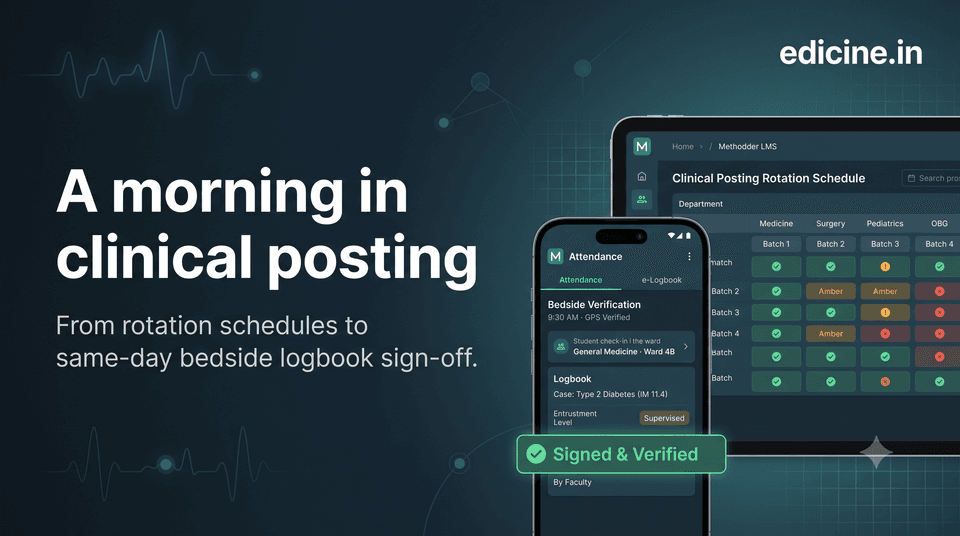
- Clinical postings: attendance marked by posting faculty against the rotation schedule
- Class MCQs: taken online and scored automatically
- Internal assessments: taken online, or marks uploaded by the department
- Logbook entries: made by the student with evidence, verified by faculty
- Session feedback: given by students after class, anonymously if they choose
- Self-study: time spent on content, tracked automatically
- Leave and OD: requested on the phone and approved along the college's chain, for example Warden, then L1, then L2
Because everything lands in one place, the same record can answer very different questions for very different people.
Four zoom levels on the same student#
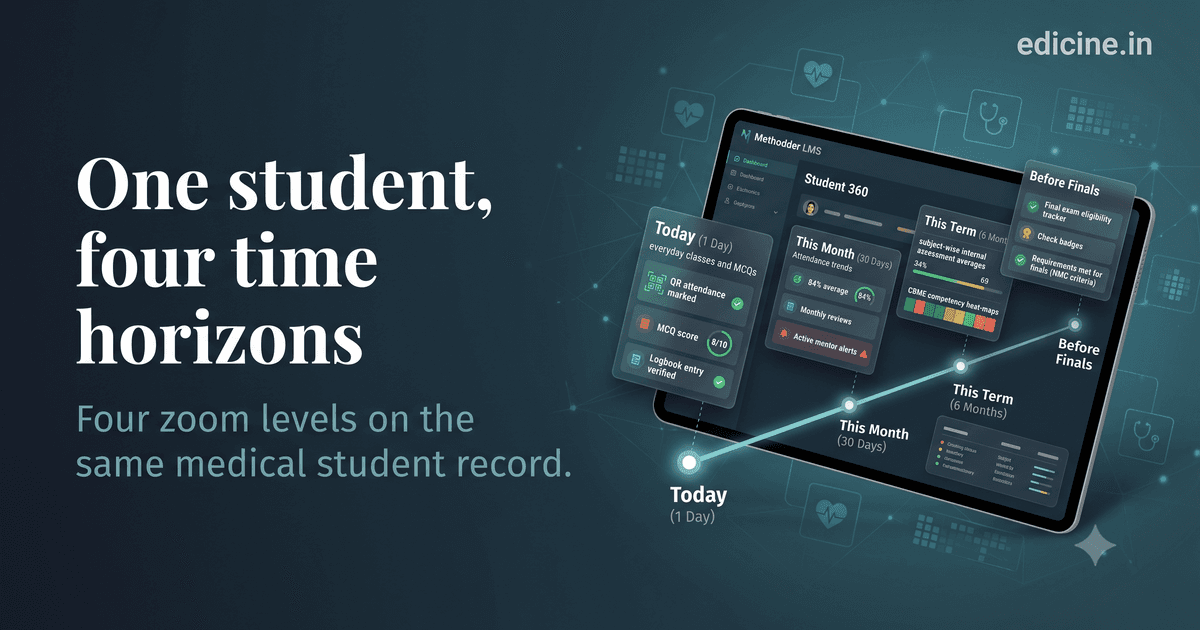
Today (1 day). The faculty member and class coordinator look at who attended each class and posting, today's MCQ scores and pending logbook entries. They follow up the same day with absentees, or with students who scored low.
This month (30 days). The mentor and HOD look at attendance trends by subject, MCQ averages, students absent for several classes in a row, and logbook entries made. They hold a mentor meeting with students who are slipping, and raise an alert before a dip becomes an attendance shortage.
This term (6 months). The HOD and Vice Principal look at internal assessment results across subjects, competency-wise gaps, attendance against thresholds and feedback trends. They arrange remedial classes for weak competencies and adjust teaching plans.
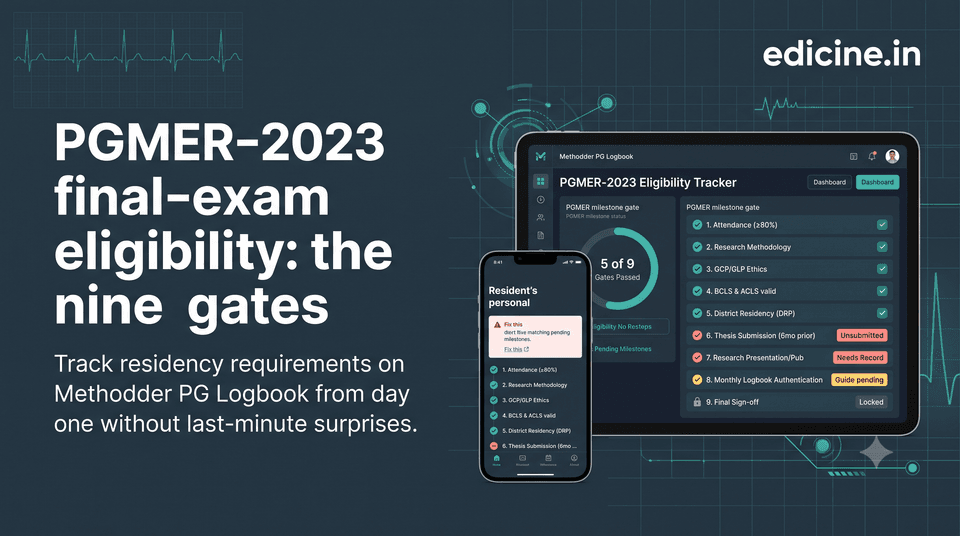
Before finals. The Dean and exam cell look at attendance and internal assessment eligibility, logbook completion, the remedial register and, for PG residents, the eligibility gates. They publish eligibility with evidence, with no last-minute counting of registers.
Nobody prepares a report for any of these views. They are filters on records created during everyday teaching.
Student 360: the view for a parent call#
When a parent calls, the mentor or Vice Principal opens one screen: month-wise attendance, every assessment and leave history for that student. There is no need to call three departments first.
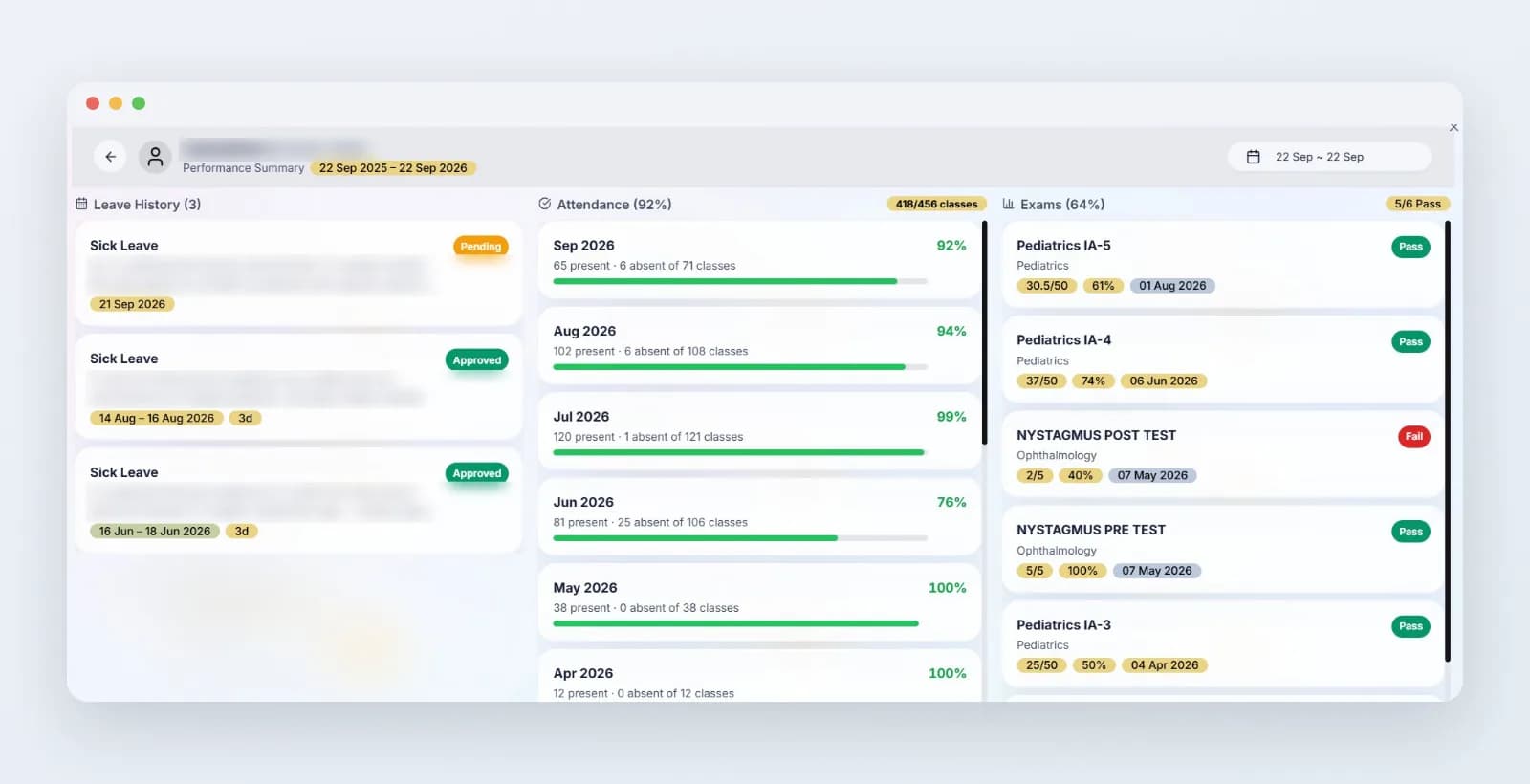
The same data also zooms out to departments, with exam-wise reports, question-wise analysis that shows what needs re-teaching, attendance trends by day, and departments compared side by side.
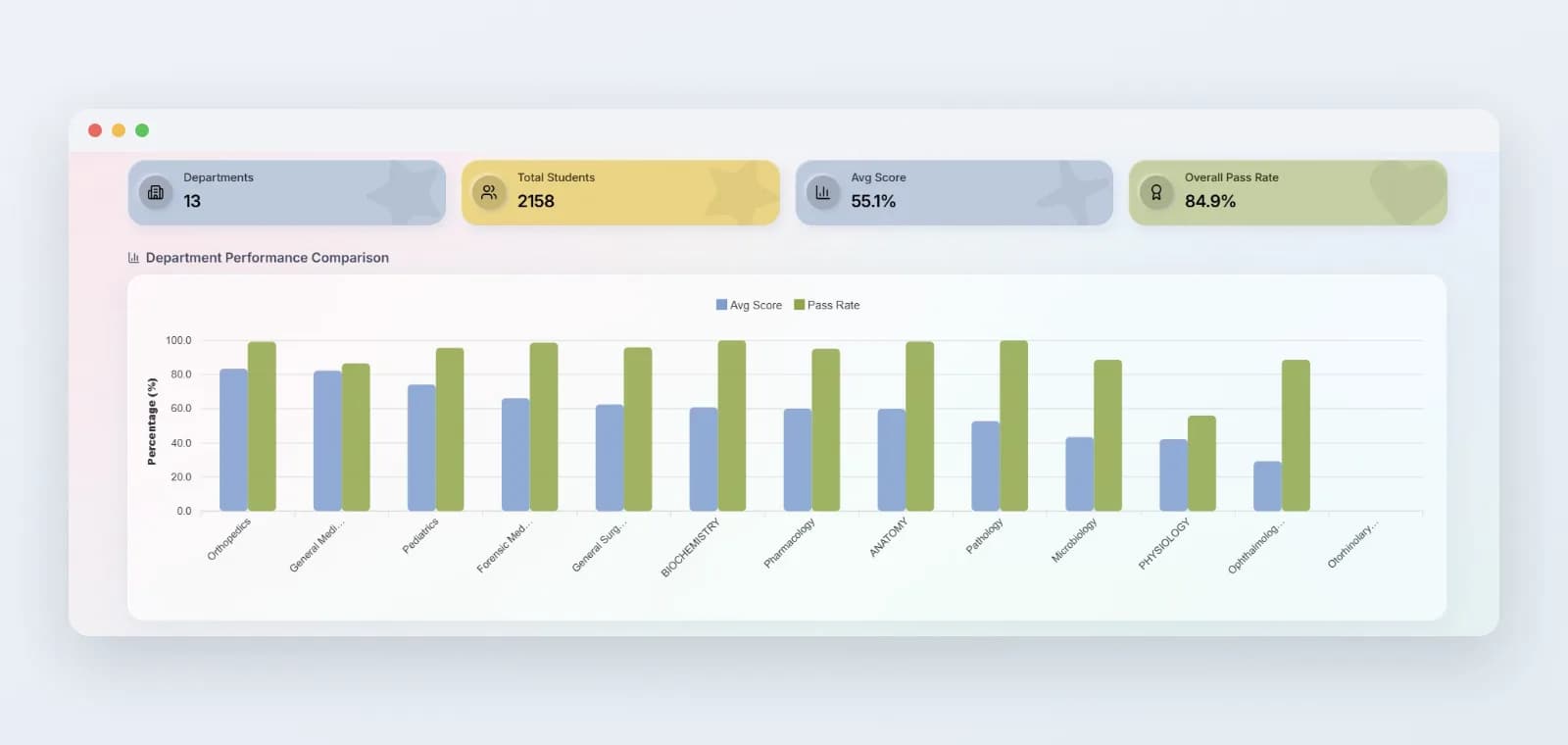
The same data, different zoom levels#
Faculty, mentors, HODs and the Dean don't need four systems. They need one record, read at the zoom level of the decision they are making.
Want to see your students this way? Book a demo or explore Methodder LMS.